

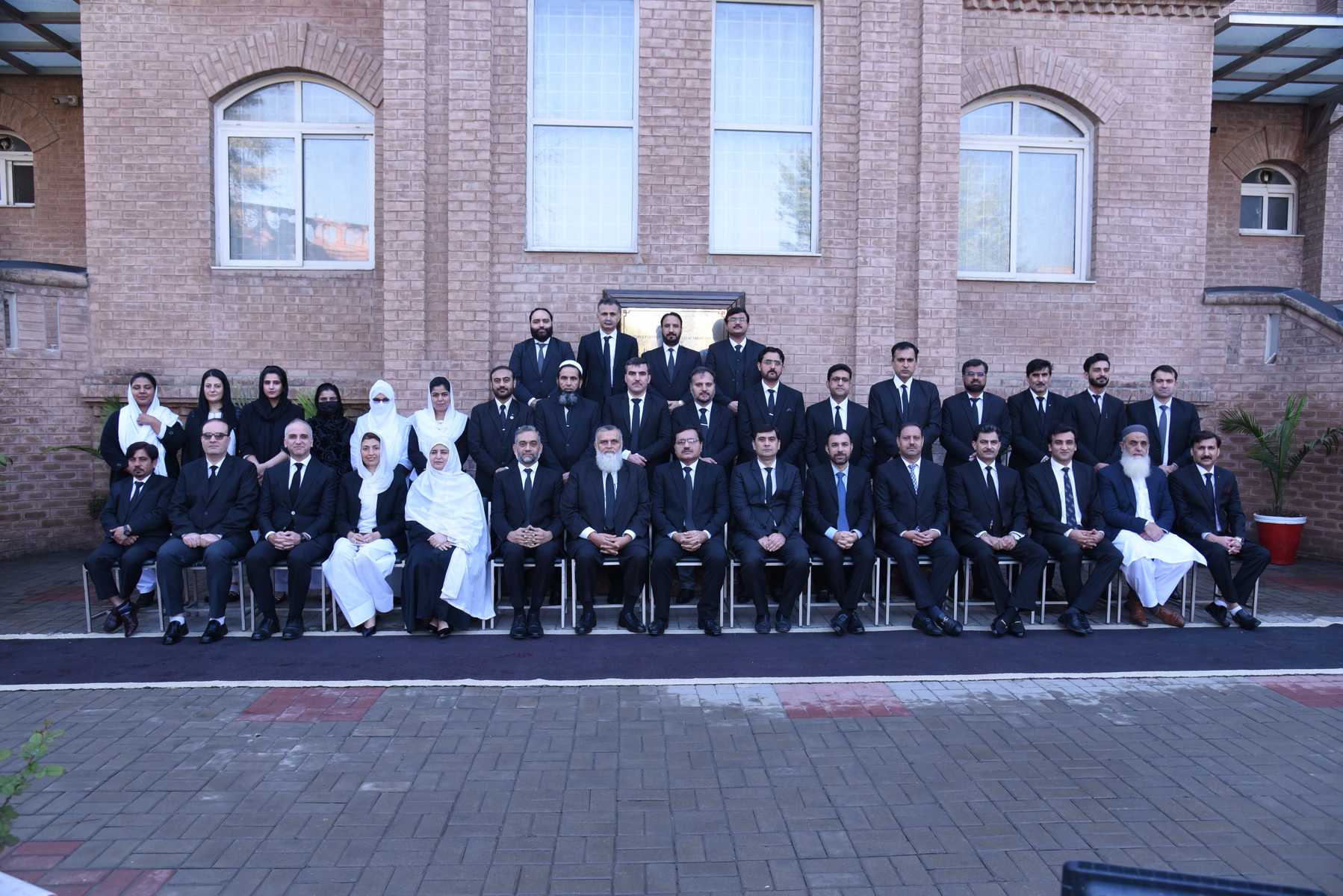
KPJA CONCLUDES BATCH-IV TRAINING ON FOUNDATIONAL IT SKILLS AND AI CORE COMPETENCIES FOR JUDICIAL OFFICERS (16-20 NOVEMBER, 2026)
PESHAWAR — The Khyber Pakhtunkhwa Judicial Academy (KPJA) successfully conducted the five-day specialized training course on "Foundational IT Skills and AI Core Competencies for Judicial Officers" (Batch-IV) from November 16 to 20, 2026. The practical computer laboratory program equipped 25 participating Judicial Officers—comprising 10 Additional District & Sessions Judges and 15 Civil Judges / Judicial Magistrates from across the province—with essential digital tools, cloud workflows, advanced word processing, and ethical artificial intelligence capabilities tailored for court administration.
The training program was formally inaugurated by Mr. Muhammad Zeb Khan, Registrar of the Peshawar High Court (PHC), alongside Director General KPJA Mr. Kalim Arshad Khan and all Academy Directors. Delivering a special message from the Hon’ble Chief Justice, PHC, the learned Registrar commended the District Judiciary's performance while stressing two mandatory procedural directives:
- Meaningful Preliminary Hearings: Judicial officers must conduct preliminary hearings with substantive rigor rather than treating them as routine administrative matters.
- Personal Drafting of Order Sheets: All judicial officers must personally draft and format their memorandum of the day (order sheets), ensuring this core duty is never delegated to court staff.
Five-Day Practical Curriculum Summary
The interactive curriculum combined theoretical frameworks with daily workstation practicals, tool portfolios, and verification checklists across major technology platforms:
| Day & Date | Core Focus & Modules | Lead Resource Person | Practical Deliverables |
| Day 1 (Nov 16) | AI Foundations, ChatGPT Ecosystem, Privacy Controls & Canvas Drafting | Asst. Prof. Adnan Amin (IM Sciences) | Source-grounded PDF analysis, exact page citations, Canvas order refinement, ChatGPT portfolio. |
| Day 2 (Nov 17) | Gemini Ecosystem, Audio Dictation, Offline LLMs & Google Workflow | Dr. Omer Usman (FAST University) | Speech transcription (Whisper), local LLM deployment (LM Studio/Ollama), AI redaction & chronology agents. |
| Day 3 (Nov 18) | Core Operating Systems, File Hygiene & Advanced MS Word Formatting | Mr. Zulfiqar Khan Kakar (KPJA) | Structured court folder setup, automated Table of Contents, Track Changes, Urdu drafting & order sheet templates. |
| Day 4 (Nov 19) | Claude Ecosystem, Multi-File Version Analysis & Artifact Generation | Prof. Dr. Awais Adnan (IM Sciences) | Incident report version comparisons, Claude Projects setup, direct Word/Excel artifact inspection & verification rubrics. |
| Day 5 (Nov 20) | Ethical AI Guidelines, Moodle LMS Post-Assessment & Concluding Ceremony | Mr. Ahmed Iftikhar (Dean KPJA) & DG Kalim Arshad Khan | National Judicial AI Guidelines compliance, 100-mark digital evaluation, and certificate distribution. |
The final day opened with an academic session on the National Guidelines for Use of Artificial Intelligence in Judicial Institutions of Pakistan, led by Dean Faculty Mr. Ahmed Iftikhar. The lecture emphasized human oversight, data privacy, and transparency, ensuring AI tools assist without replacing independent judicial reasoning. Participants subsequently completed a formal 100-mark post-assessment test on the KPJA Moodle LMS portal.
The training concluded with a ceremony chaired by Chief Guest Mr. Kalim Arshad Khan, Director General KPJA, who conferred certificates of completion upon all 25 participating judicial officers. In his closing address, the Director General highlighted the Academy's commitment to fostering technological self-reliance while preserving judicial integrity. Speaking on behalf of the cohort, the Class Representative praised the practical lab curriculum, Moodle LMS portal, and seamless Academy coordination.