
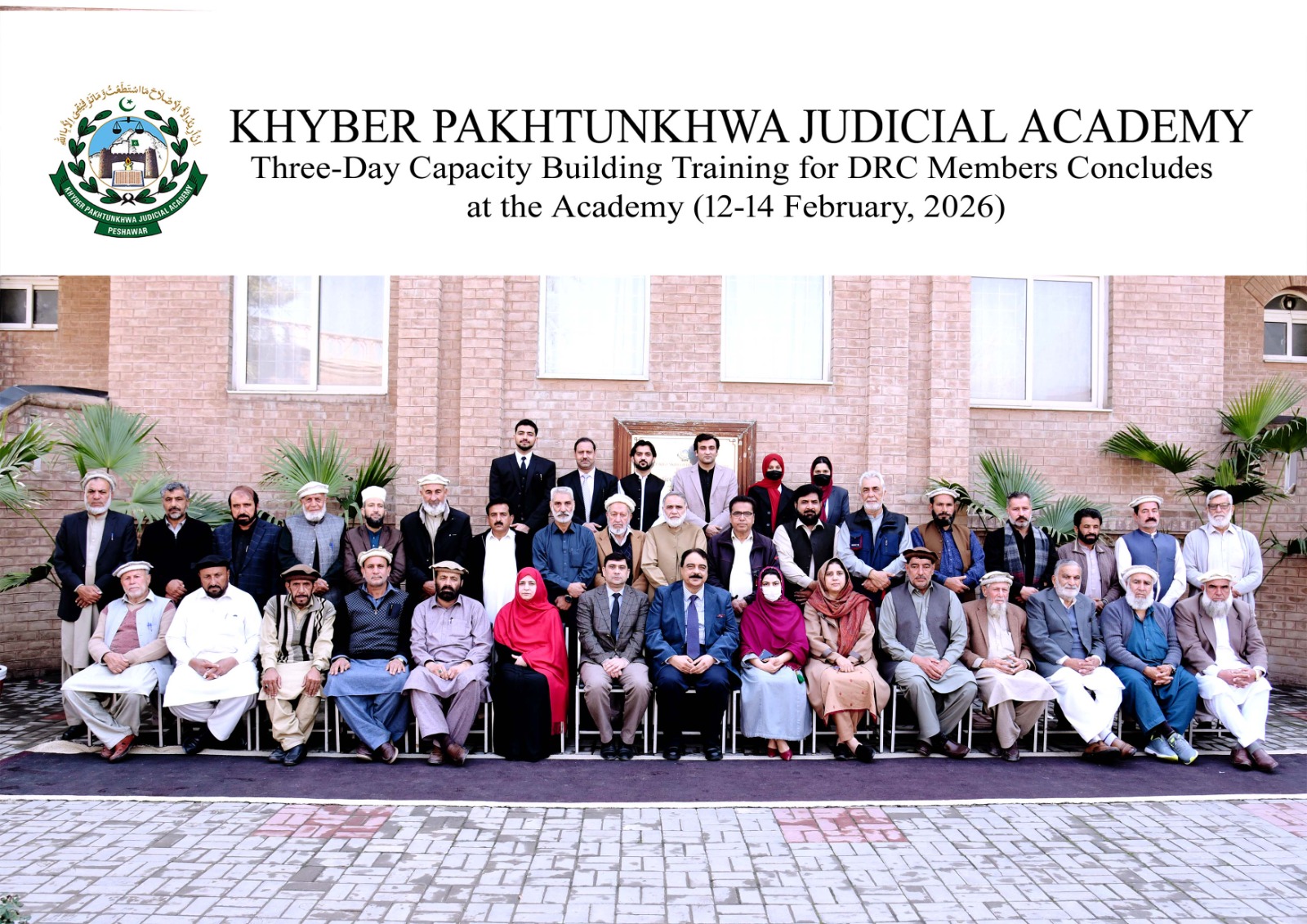
The third batch of the three-day capacity building training program for Dispute Resolution Council (DRC) members was successfully conducted at the Academy from 12–14 February 2026, with the support of KP Police and UNDP.
A total of 32 DRC members from District Kurram, Bajaur, and Swat participated in the training aimed at strengthening mediation skills, promoting standardized record keeping, and enhancing community-based dispute resolution mechanisms.
Day-1: Foundations of Mediation
The program was formally inaugurated by Mr. Jehanzeb Shinwari, Director General KPJA, who emphasized the importance of Alternative Dispute Resolution (ADR) in ensuring accessible, timely, and peaceful justice at the grassroots level.
The first day focused on the foundations of mediation and the role of DRCs, with sessions conducted by Mr. Akhtar Ali Shah, former Inspector General of Police. Participants were introduced to ADR principles, conflict resolution strategies, communication and negotiation skills, and core ethical standards including neutrality, impartiality, and confidentiality.
The day also included a session on gender-sensitive by Ms. Rakhshanda Naz, former Ombudsperson KP Protection Against Harassment of Women at the Workplace and rights-based mediation, ensuring inclusive approaches to handling disputes involving vulnerable groups.
Day-2: Practical Mediation Skills
The second day emphasized practical mediation skills. Participants received training on handling family, property, and community disputes, along with strategies for managing power imbalances and vulnerable groups.
Interactive mediation role plays and simulations, conducted by Ms. Faryal, District & Sessions Judge and Director Instruction KPJA, provided hands-on learning opportunities. Feedback and reflection sessions further strengthened participants’ practical understanding of mediation processes.
Day-3: Record Keeping and Referral Coordination
The final day focused on standardized case intake and registration, documentation formats, case tracking, data protection, and confidentiality. Participants were also guided on effective referral pathways to police, courts, and social services, reinforcing the importance of institutional coordination in complex cases.
A post-training evaluation was conducted to assess learning outcomes and participant feedback.
Concluding Ceremony
The program concluded with a formal ceremony beginning with a recitation from the Holy Quran and remarks from the class representative. Addressing the participants, DG KPJA Mr. Jehanzeb Shinwari appreciated their commitment and active engagement throughout the training and reiterated the crucial role of DRC members in promoting social harmony and strengthening access to justice.
In his remarks, Mr. Akhtar Ali Shah encouraged participants to implement standardized, ethical, and professional mediation practices in their respective districts.
The ceremony culminated with the distribution of certificates by DG KPJA, marking the successful completion of Batch-3.
The three-day training significantly enhanced the professional capacity of DRC members, equipping them with practical tools and standardized procedures to ensure effective, transparent, and community-centered dispute resolution across the province.